Measuring AI Search properly
Why rankings, clicks and GA4 traffic are no longer enough
A new framework for measuring AI influence from machine access to market influence
For years, search measurement followed a familiar chain: rankings, clicks, sessions, conversions.
That chain no longer captures what is actually happening.
In AI Search, influence often happens before the click, without the click, or long before analytics can recognise where the journey really began. A buyer may first encounter your brand in ChatGPT, refine their shortlist in Gemini, and only visit your site later through branded search, direct traffic, or another channel entirely. By then, the original source of influence is already obscured.
This is the measurement gap many marketing teams are now running into.
And the market is starting to acknowledge it. On 13 May 2026, Google Analytics introduced a dedicated AI Assistant traffic measurement. GA4 now assigns a new ai-assistant medium when the referrer matches a recognised AI assistant, groups those sessions under a new AI Assistant default channel, and labels the campaign as (ai-assistant). Google explicitly frames this as a way to measure traffic coming from chatbots such as ChatGPT, Gemini and Claude.
That is an important step forward.
But it still only measures the observable click.
It does not measure the full influence of AI systems on discovery, shortlist formation, brand framing or preference. It does not recover visits that lose their referrer. It does not explain what happened inside the model before the click. And it does not capture crawler access, which sits entirely outside browser analytics. The new channel is useful, but it is only one layer of the picture.
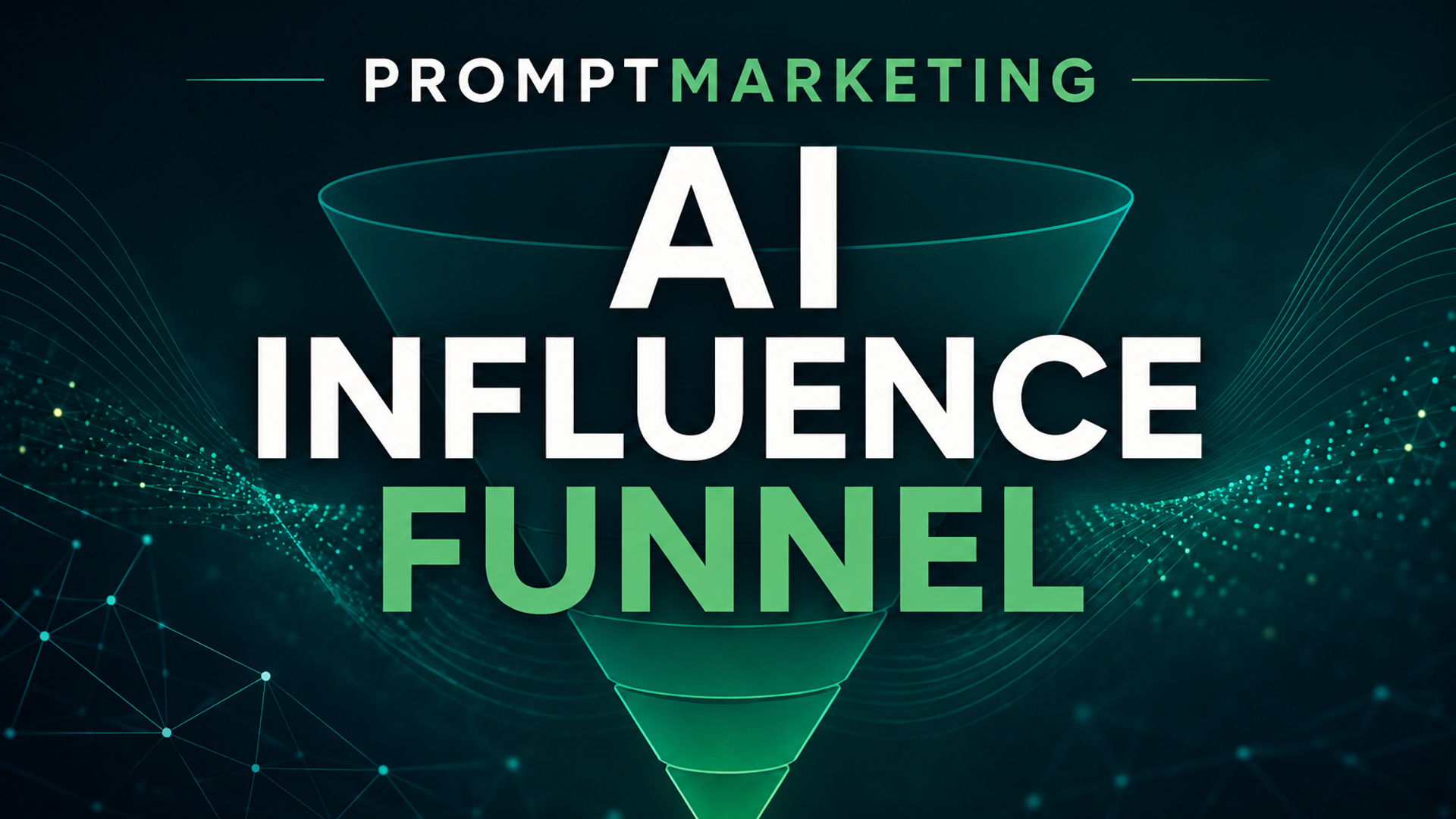
That is exactly why we built the PromptMarketing AI Influence Funnel: a framework for measuring AI Search from machine readability to market influence. It is built around five layers: Machine Access, Model Visibility, Human Referral, Declared Discovery, and Qualitative Journey Intelligence. Together, those layers create a more honest view of AI Search than traffic data alone ever could.
The problem with old measurement logic
Traditional analytics starts when someone lands on your website.
But in generative experiences, that is often the middle of the story.
Models now do more than retrieve links. They summarise, compare, recommend, rank implicitly, frame categories, and shape perception before the website visit happens. Your brand may already have been selected, rejected, repositioned or benchmarked against competitors before a session ever appears in GA4.
This is why it is a mistake to go looking for one new master KPI to replace rankings.
There is no single replacement metric.
Logs show access, not persuasion. Prompt sampling shows visibility, not revenue. GA4 shows measurable traffic, not total AI influence. Surveys recover hidden attribution, but imperfectly. Qualitative research explains behaviour, but is not a KPI by itself. The correct approach is not a single number. It is a sequence of evidence.
The PromptMarketing AI Influence Funnel

1. Machine Access
The first question is basic but essential: can AI systems actually access and read your content?
This layer looks at crawler logs, page-level bot activity, access patterns and, where available, deterministic grounding signals. In the updated version of the framework, that includes Bing Webmaster Tools’ Copilot Grounding Queries report: one of the clearest signs available today of which site content a machine is actually using in answer generation.
This matters because no model can cite, mention or select content it cannot reliably access.
But Machine Access is also widely misunderstood. A crawler hit is not proof of influence. It does not mean the page shaped an answer. It does not mean the brand was recommended. It only proves that the content entered the machine-readable opportunity set.
This distinction matters even more now that marketers are looking at AI traffic more seriously. The GA4 Helper framework usefully separates three different phenomena that are often conflated:
- AI crawlers visiting your infrastructure
- AI referrals sending measurable sessions
- AI-influenced traffic that reaches the site without preserving clean attribution
Those are not the same thing. Crawlers are a server-side signal. Referrals are a browser-side signal. And influenced-but-unattributed visits often sit somewhere in between, visible only indirectly.
One of the most useful new additions to the framework is therefore correlation analysis: if high-value pages suddenly receive sharply increased AI bot activity, and that is followed by a lift in branded search, direct traffic or assisted conversions days later, that may indicate pre-click AI influence worth investigating further. It is not deterministic attribution. But it is commercially meaningful leading evidence.
2. Model Visibility
Once the machine can access your content, the real strategic question becomes: does it actually use you in the answer?
This is the centre of AI Search measurement.
At PromptMarketing, Model Visibility means measuring whether your brand is:
- mentioned
- cited
- selected
- represented accurately
across structured prompt sets and strategic prompt buckets such as brand, comparison, informational and commercial queries.
This is where many brands discover a difficult truth: AI does not necessarily see them the way they see themselves.
A brand may believe it owns a category narrative. The models may frame it as generic. Or too expensive. Or not trusted enough. Or strong on awareness but weak on recommendation. Or entirely absent from key buying moments. That gap between intended positioning and model representation is not academic. It is commercial.
The updated framework makes an important improvement here: a more explicit taxonomy-first approach. Instead of sampling prompts randomly, you start with a category structure and use that to organise visibility measurement. That lets you map where the brand has real category authority, where it is being out-selected, and where it is missing altogether.
This is also where one of the best practical proxies for zero-click discovery appears. If category visibility rises across major LLMs and that is followed by a measurable lift in branded demand, then the visibility layer is likely shaping human behaviour even when the click itself is not preserved in analytics. Again, that is inferential rather than deterministic. But in AI Search, that distinction is normal.
3. Human Referral
This is the layer most marketers recognise first: does AI visibility generate measurable visits and conversions?
Here we look at:
- GA4 traffic from AI platforms
- landing pages
- engagement patterns
- key events
- assisted paths
- conversion outcomes from visible AI-origin sessions
This is where Google’s new AI Assistant default channel grouping becomes genuinely useful. It means recognised AI assistant referrals no longer have to remain buried in generic referral traffic. For many teams, that will immediately improve reporting clarity and reduce the need for manual regex-based workarounds in custom channel groups.
But this is the crucial point: GA4’s AI Assistant channel measures AI traffic, not total AI influence.
And there are two important caveats. First, Google has not yet published the full list of recognised AI assistant referrers. Second, traffic that arrives without a referrer header can still land in Direct, including visits from in-app browsers, mobile contexts, or copy-paste behaviour. In other words, even with a native AI channel, some AI-origin traffic will remain invisible or partially obscured.
That aligns perfectly with the wider PromptMarketing view. Human Referral is a necessary layer, but not a complete one.
AI traffic reporting becomes useful only when you move beyond raw session counts and look at which platforms are sending traffic, which pages they land on, whether those sessions engage, and whether they trigger valuable actions. Counting AI sessions alone is vanity. The job is to understand platform quality, landing-page concentration, event quality and commercial contribution.
And that is where many brands will find something strategically important: AI traffic may be smaller in volume than traditional organic traffic, but often stronger in intent. The real question is not whether AI sends enough clicks to look big in a dashboard. The question is whether those visits arrive with more pre-qualified intent because the model has already compressed part of the research and trust-building process upstream. That is the more interesting commercial signal.
4. Declared Discovery
Because analytics cannot see everything, we need to ask buyers directly.
Declared Discovery captures what leads and customers say influenced their research, shortlist formation and eventual decision. This can be done through source-of-discovery fields, post-conversion surveys, onboarding questions, lead forms, CRM fields and sales intake processes.
This layer matters because a growing share of AI influence happens in what could reasonably be called Dark AI: journeys that begin in an LLM environment but reappear later as direct traffic, branded search, email return visits or another channel that masks the original source. The GA4 Helper article explicitly calls out this distinction between visible AI referral traffic and broader AI-influenced traffic that loses clean attribution.
A buyer may first discover your brand in ChatGPT, compare options in Gemini, and only convert later via a direct visit. Standard analytics may tell you the last leg of that story. It will rarely tell you the whole thing. A well-designed survey often will.
Declared data is not perfect. Memory is incomplete. Attribution is subjective. Respondents simplify. But in an environment where upstream influence is increasingly hidden, asking the buyer directly is no longer optional. It is part of the measurement stack.
5. Qualitative Journey Intelligence
The final layer answers the question the other four can only approximate: why is this happening?
Through interviews, win-loss analysis, sales notes, onboarding conversations and open-text feedback, this layer reveals:
- where AI enters the journey
- which prompts matter
- which proof points drive trust
- which messages the models repeat
- where representation diverges from intended positioning
This is where measurement becomes strategy.
You start hearing things like:
- “ChatGPT mentioned your integration first.”
- “Gemini positioned you as the safer enterprise option.”
- “We had not heard of you before the AI surfaced you.”
- “The model made us think you were more premium than your competitors.”
Those are not just anecdotes. They are signals about the proof points, entities, associations and commercial narratives that the models are amplifying. They can and should feed directly back into technical optimisation, authority building, content strategy and prompt measurement design.
The real value is the insight loop
The AI Influence Funnel is not just a reporting model. It is a learning system.
What you learn from later layers should continuously improve earlier ones:
- crawler insights should sharpen page priorities
- model visibility gaps should reshape content and entity work
- AI referral patterns should refine commercial hypotheses
- declared discovery should improve source capture
- qualitative insights should feed back into prompts, proof points and positioning
This loop is what makes the framework useful.
It does not just tell you whether AI systems touched the journey. It helps you understand how, where, and with what commercial consequence.
No, GA4 does not solve AI Search measurement on its own
Google’s AI Assistant channel is a meaningful development. It formalises AI assistants as a legitimate traffic source category in mainstream analytics and makes measurable AI sessions easier to report on. For many teams, that is overdue and welcome.
But it does not eliminate the core measurement problem.
It still captures only the sessions GA4 can identify through a recognised referrer. It does not explain crawler access. It does not measure model visibility. It does not recover Dark AI journeys. It does not tell you how the model framed your brand before the visit. And it does not show how AI influenced shortlist formation when the final session appears elsewhere.
So yes, use the new AI Assistant channel.
But do not mistake it for a complete attribution model.
A better way to measure AI Search
The PromptMarketing AI Influence Funnel is our answer to the measurement gap in the generative era.
It measures whether machines can access your content, whether models use it, whether that creates measurable human visits, whether buyers say AI shaped their discovery, and how real customer journeys are changing underneath all of that.
That is a more honest framework than simply asking how much traffic ChatGPT sent last month.
Because AI Search is not just a traffic source.
It is a new layer of influence operating before, around and sometimes instead of the click.
And serious measurement needs to reflect that.
From machine access to market influence.