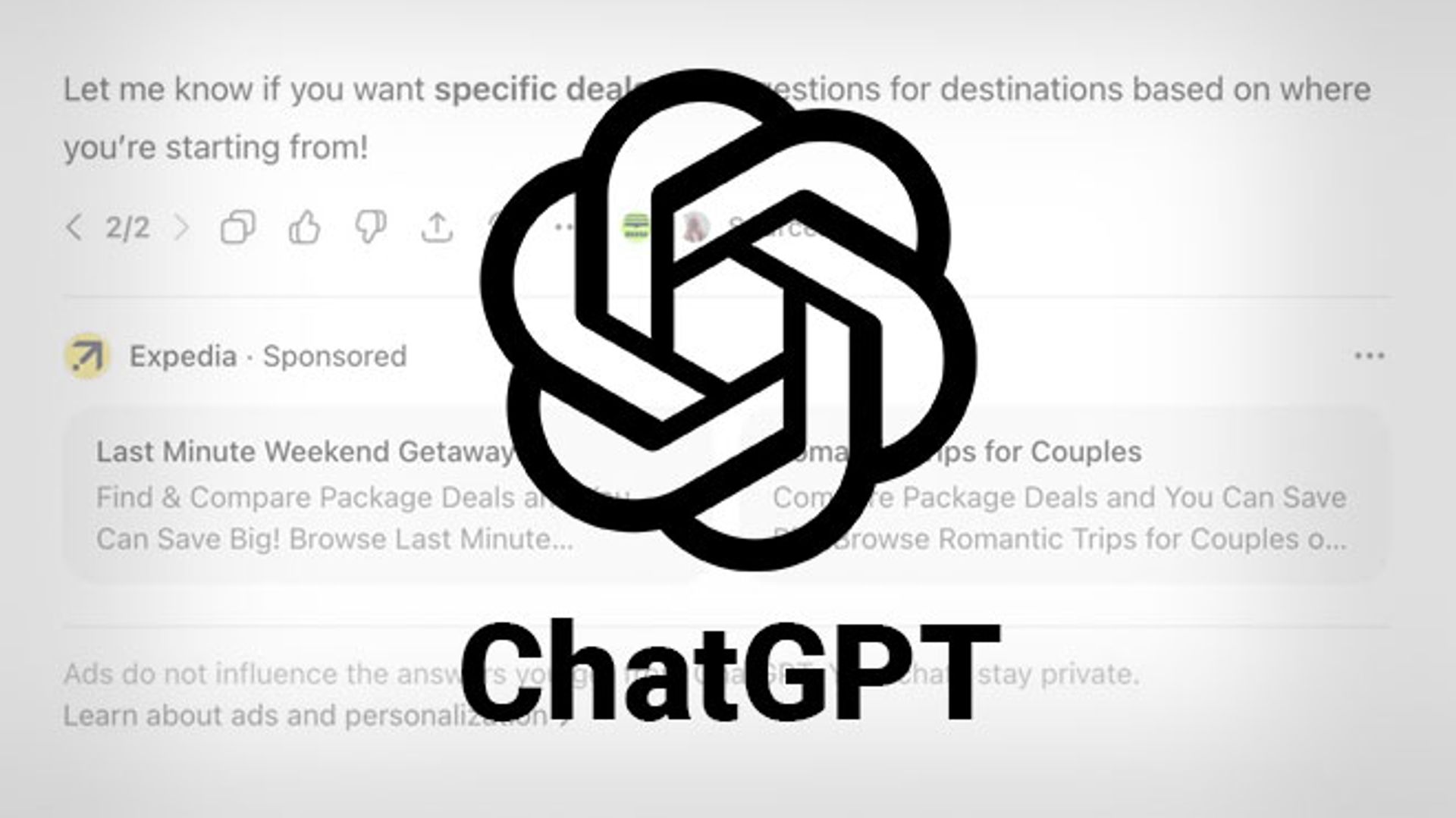
Two headlines landed this week. Adformatie: ChatGPT ads underperform in first tests. Search Engine Journal: six months in, advertisers still do not know what good looks like. Both are fair reads of the published evidence. Both miss what the evidence shows when you put it next to the channels advertisers already buy.
We run ChatGPT Ads campaigns for clients in the United States and the Netherlands, B2B and consumer. Below are the metrics we see, the benchmarks they compare to, and where the early critics are right.
The metrics we see
- CTR. ChatGPT Ads, what we see: 0.5% to 1.4%. Meta Ads average: 1.49%. Google Search average: 6.64%. Google Display average: 0.05% to 0.1%.
- CPC. ChatGPT Ads, what we see: EUR 1.50 to USD 3.60. Meta Ads average: USD 1.72. Google Search average: USD 5.42. Google Display average: USD 0.50 to 1.00.
- CPM. ChatGPT Ads, what we see: around 20 (EUR or USD). Meta Ads average: USD 11.54. Google Search average: USD 2 to 10. Google Display average: USD 0.50 to 2.00.
Benchmarks: WordStream (Google Search, April 2025 to March 2026, 13,474 US campaigns), Digital Applied (Meta, Q1 2026), WebFX (Google Display and Search CPM, June 2026). Our figures come from OpenAI Ads Manager. Benchmarks are US data in dollars; part of our data is in euros. We have not converted currencies, so read the table for order of magnitude, not decimals.
Consumer campaigns sit at the top of our CTR range and the bottom of our CPC range. B2B campaigns sit at the other end. That is the same split you see on Meta, where B2B clicks cost USD 2.94 against a USD 1.72 all-industry average.
How that compares to the published tests
Search Engine Journal collected results from advertisers who have gone public. CPCs run from USD 3 to USD 22. Common Thread Collective reports USD 4.41 and a 0.94% CTR on ecommerce. Floyd Blaikie reports USD 9.29 and 0.7% on B2B. Synter reports USD 5.10 in the UK, USD 10.62 in the US and USD 22.89 in New Zealand. Hostinger saw CPMs above USD 65 and pulled back.
Adformatie quotes Choice OMG in Canada: CAD 415, about 9,000 impressions, 60 clicks, a 0.6% CTR, and no interested buyers. Its managing director called ChatGPT a display channel rather than an engaged environment, since his other channels click at around 2%.
Put those next to our table and two things are clear.
The CTRs agree. Every published test and every campaign we run lands between 0.5% and 1.5%. That is a Meta click rate. It is not a search click rate, and it was never going to be. A search ad intercepts a query. A ChatGPT ad appears below an answer the user already has. Anyone who plans this channel with search expectations will call it a failure in week one, and several have.
The costs do not agree, and that is the interesting part. Our CPMs of around 20 are a third of what Hostinger and Floyd Blaikie paid. Our CPCs sit at or below the bottom of the SEJ range. Same platform, same months. The difference is a contextual auction with few bidders in the Netherlands, a US market that filled up faster, and, we would argue, campaign structure built on knowing which conversations to be in. Search Engine Journal is right that OpenAI publishes no benchmarks and no auction insights, so nobody can prove which of those explains the gap. What we can say is that the gap exists and that European inventory is currently cheap.
What the benchmarks do not show
Mobile owns the channel. Three quarters or more of our clicks come from mobile, and mobile beats desktop on both CTR and CPC. Plan creative for a phone screen.
Android outperforms iOS and web. With spend split evenly across the three platforms, Android delivers the highest CTR and the lowest CPC in our Dutch campaigns. Early data, but worth checking in your own account.
OpenAI's suggested creative is hard to beat. Ads Manager proposes copy for each campaign. In our accounts the suggestion outperforms hand-written ads on CTR and CPC. Run it alongside your own and let the auction decide.
Problem conversations beat vendor conversations. In our B2B campaigns, ad groups built around operational pain points take over 80% of clicks. Ad groups built around vendor comparison and category fit barely register. Targeting in the EU is contextual only, with no personalisation and no chat history, as Adformatie notes. The context that earns a click is someone describing a problem, not someone shortlisting suppliers.
Cheaper impressions do not mean cheaper clicks. We see CPM fall while CPC rises within the same account. Without auction data nobody can say why. Watch CPC, not CPM.
Where the critics are right
Measurement. Adformatie reports that Cleverly saw 57 clicks in Ads Manager and fewer than 20 visits in Google Analytics. That gap is partly real and partly a measurement artefact, and you cannot tell which until you fix the measurement.
Most of the artefact comes from client-side tracking. The measurement pixel reads the click ID (oppref) from the landing-page URL and stores it in a first-party cookie. Ad blockers, Safari's tracking prevention and consent gating all get in the way of that, and every click they block looks like a click that never arrived. OpenAI's Conversions API solves that part: it accepts server-to-server events, and page_viewed is one of the supported event types. Capture oppref from the landing-page URL on your own server, send a page_viewed event per arrival, deduplicate against the pixel with a shared event ID, and you have a landing-page count that does not depend on the browser cooperating.
What remains after that is the real gap: taps that never reached your server. That residual number is the click-quality signal Adformatie's sources were missing. Ads Manager alone is one side of the ledger. Server-side landing-page views are the other side. We set both up before a campaign goes live, and we read the difference between them as a metric in its own right.
Conversion. Nobody has published a credible conversion-rate benchmark. Common Thread claims 3.3x to 6.8x ROAS on high-ticket ecommerce. Floyd Blaikie found that five of 146 identified companies matched the ideal customer profile. Whether conversation context is worth Meta-level prices is a conversion question, and six months in, the answer differs per advertiser. SEJ's conclusion stands: good starts from what the channel produces for your own business, not from a platform number.
Audience. Ads reach Free and Go users only. Plus, Pro, Business and Enterprise subscribers never see one. That skews the audience away from exactly the people some B2B and luxury advertisers want.
What changes next
Search Engine Land reports that OpenAI has expanded ChatGPT Ads across selected countries in Europe, India, the Middle East and North Africa, and shipped the tooling advertisers have been asking for: custom audiences above five million members, a measurement pixel that accepts hashed customer data, a Conversions API with Android identifiers, a planned conversion-optimisation model, and card-level reporting for product feeds. Adformatie confirms Dutch advertisers have had self-serve access since 31 August. From our own experience: we opened up 4 new Ad accounts in the last 8 days.
The quiet auction does not last. Every advertiser in the SEJ piece who paid USD 60-plus CPMs was buying in a market that had already filled. European inventory is where the US was in spring.
If you want to know what your buyers' ChatGPT conversations would cost to be present in, talk to us.
Sources: Adformatie, ChatGPT-advertenties presteren ondermaats in eerste tests (7 Sep 2026); Search Engine Journal, 6 months into ChatGPT Ads, advertisers still don't know what good looks like (8 Sep 2026); Search Engine Land, OpenAI expands ChatGPT Ads globally and builds out its ad stack (4 Sep 2026); WordStream, Google Ads Benchmarks 2026; WebFX, Google Ads Benchmarks 2026; Digital Applied, Facebook Ads Benchmarks 2026; OpenAI, Conversions API documentation; OpenAI, Measurement Pixel documentation.