Ten days after the first ChatGPT ads reached Dutch users, the next door opened: since the start of September, OpenAI's self-serve Ads Manager (beta) is open to advertisers in the Netherlands. No partner desk, no waiting list. You create an account, build a campaign, and your ad can appear under ChatGPT answers the same day.
We did exactly that. PromptMarketing's own campaigns are live in ChatGPT, which means everything below comes from the inside of the platform, not from a press release.
What you see when you walk in
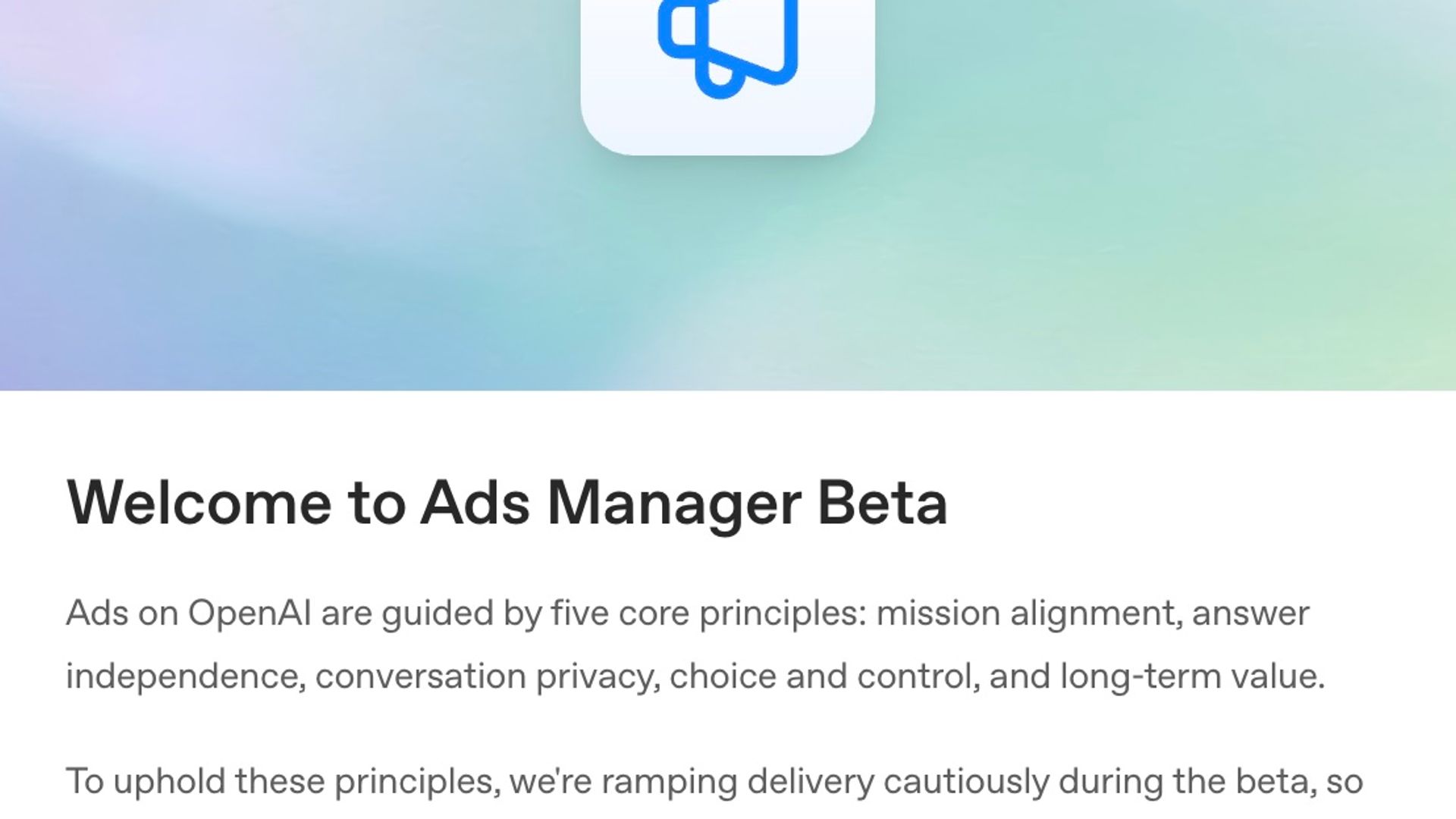
The welcome screen sets the tone. OpenAI frames ads on its platform around five principles: mission alignment, answer independence, conversation privacy, choice and control, and long-term value. Two of those matter directly for how you plan: answer independence means the organic answer above your ad is never for sale, and conversation privacy means you will never see the conversations your ad appeared in, only aggregated metrics.
The same screen contains the sentence every early advertiser should read twice: OpenAI is ramping delivery cautiously during the beta and expects delivery to scale gradually. Translation: your first weeks will show limited volume regardless of budget. Judge the channel on what you learn per impression, not on week-one spend.
Campaign management as a conversation
The most striking difference with Google or Meta is not the ad format, it is the interface. Ads Manager comes with an agent inside ChatGPT itself. You mention @ChatGPT Ads Manager in a chat and ask it to set up your account, create a new ad, or, with the ads-manager-start-agent skill, run recommendation-only reviews of your campaigns. Recommendation-only is the important qualifier: the agent proposes, you decide. That is the right default for a platform where nobody has benchmarks yet.

Our take after the first days: the agent is a fast way through onboarding and a decent second pair of eyes on a running campaign. The decisions that determine results, which conversations you want to be in and what the organic answer says above you, are still yours to make, and they need data the agent does not have.
Five things to get right from day one
- Measurement before media. Install the OpenAI Pixel or the Conversions API before the first impression; the platform optimises towards what it can see, and a campaign without conversion signals learns nothing.
- Context is your targeting. There are no keywords. Decide which buying conversations you want to be present in, in your buyers' words, and build the campaign around those rather than around products.
- Check the organic answer first. Ask ChatGPT the questions your campaign targets. If it recommends a competitor, your ad underneath pays to decorate their pitch. Fix the answer with GEO, then advertise.
- Budget to learn. Delivery is capped during the beta and there are no Dutch benchmarks. Set a learning budget, a test cadence and one hypothesis per campaign, and read results weekly, not daily.
- Keep an eye on the market. Advertisers only see their own dashboards; use an independent view of which brands already appear in your category's conversations before you set your bids.
What this means for Dutch advertisers
The window every new channel offers, quiet auctions and cheap learning, is open right now in the Netherlands, and it will not stay open long: the same self-serve door is open to your competitors. The brands that treated early Google Ads as a learning channel spent the next decade ahead. The same applies here, measured in months.
If you want to know what advertising in ChatGPT means for your brand, or want your first campaign set up and managed by a team that already runs its own, start at our ChatGPT Ads page. For a public view of who is already advertising in ChatGPT, browse the European ChatGPT Ad Library.