iOS 27 is out today and with it Siri AI, the assistant Apple promised in June 2024. It answers questions from the web with sources, reads what is on your screen, searches your mail, messages and photos, and acts inside apps. It ships as a beta, in English, on iPhone 15 Pro and newer, and it is on by default.
Below: what the consumer gets, what we expect to happen to search behaviour, what the architecture means for AI search visibility, and what a global brand should do this quarter. Facts are sourced. Where Apple has said nothing, we say so.
What launches today
The assistant. Apple's description: Siri AI can "get up-to-date information from the web on virtually any topic and generate a helpful answer", use personal context across mail, messages, photos and apps, understand what is on screen, and take actions across apps through App Intents. It has its own app with conversation history synced across devices, and a "Search or Ask" bar reached by swiping down from the top of the screen. On Mac and iPad it lives inside Spotlight.
The answers. Siri AI cites. Cult of Mac, from the developer beta: "Siri cites its sources with every question, without having to ask." iDrop News saw "source links beneath each paragraph". Apple's own documentation says answers "may include links to sources and websites used to help generate the answer". Since beta 5 there is a "Search the Web" fallback at the bottom of results.
The rollout. English only at launch; French, Japanese, Korean, Portuguese and Spanish in October. iPhone 15 Pro and newer, M1 iPads and newer, Macs, Vision Pro. Morgan Stanley estimates 850 million of the 1.3 billion iPhones in use cannot run it. Not in China, and on iPhone not in the EU for now. Apple's fine print says usage limits on Siri AI "will" be introduced, with "increased access available for a fee" through iCloud+ tiers.
The competition inside the phone. ChatGPT stays available as an extension in the Siri app. Apple's developer framework supports Claude and Gemini through a model protocol. A user-facing Gemini or Claude extension was reported by Bloomberg but not announced.
What we expect to happen to search behaviour
Siri AI is not a new app people have to choose. It is the default assistant on the device, reachable by voice, side button and a swipe, and integrated into Spotlight. M.G. Siegler's read after WWDC: "most users will not be AI power users. They'll be content to use the default, provided the default is good enough." Joanna Stern after a week with the beta: "Siri is good. Like good-good."
That matters because the question types Siri handles first are the ones already leaking out of Google. Apple's own examples: opening hours for the nearest hardware store, how to get tickets, a recipe, a restaurant. The beta testers' examples: library rules, a theme park's prices and history, whether IKEA sells spare parts for a shelf. These are the queries where Google's AI Overviews already answer without a click. SparkToro's 2026 data has 68% of Google searches ending without a click. Siri AI adds a second answer layer in front of the browser, on the device where 51% of US mobile web traffic already runs through Safari.
Our expectations, stated plainly so we can be wrong in public:
1. Local and factual queries move first. Hours, prices, directions, "does X sell Y", "what is Z". Siri has location, Maps and the web index in one place. Expect a measurable share of these to resolve on-device without a Safari session.
2. Shopping and comparison queries move slowly. No tester has published a "best X for Y" result. Apple has said nothing about product answers, merchant links or sponsored placement. Until that changes, transactional intent stays with Google, Amazon and ChatGPT.
3. Clicks exist, but they will be thin and hard to see. Siri links per paragraph, which is more than Google AI Overviews did for a year. Nobody has documented the referrer string, whether links open Safari, or how prominent they are. Analytics will show something from today; expect it to be small and unlabelled.
4. Accuracy will be uneven, and sources will get blamed. iDrop News caught Siri citing university library rules while answering about the public library. TechCrunch asked for news about Iran and got a contact search. When an assistant misattributes, the cited domain wears it. Entity clarity is a defence.
5. The ChatGPT extension carries the heavy lifting for now. Long research, coding, document work goes to ChatGPT inside Siri. Siri AI wins the short, current, personal and local questions.
6. Publishers get paid for news; everyone else gets crawled. The Wall Street Journal reports Apple offering news publishers pay-per-use deals with a nine-figure budget. Licensed sources will dominate news answers. Product, service and expertise content enters through the crawler on the same terms as Google.
Why the architecture matters for AI search visibility
The headline says Siri runs on Gemini. Apple's own wording is narrower: the new Apple Foundation Models are "custom builds for Apple Silicon, trained using proprietary data, and refined using outputs from Gemini frontier models". Craig Federighi: "we use none of the models that Google deploys to their customers." The biggest model, AFM 3 Cloud Pro, runs on NVIDIA GPUs inside Google Cloud under Apple's Private Cloud Compute; Google describes its own access as "no privileged runtime access".

For visibility, the retrieval layer matters more than the model. Federighi: Siri's answers are grounded by "Apple's World Knowledge Service", and "we of course don't use Google Search or anything like that as the foundation". MacRumors confirmed in June that Apple "rebuilt its search index for Siri AI". That index is fed by Applebot, Apple's crawler since 2015.
So there are now three web indexes that feed consumer answer engines: Google's, Bing's (behind ChatGPT and Copilot), and Apple's. Two things follow for a brand.

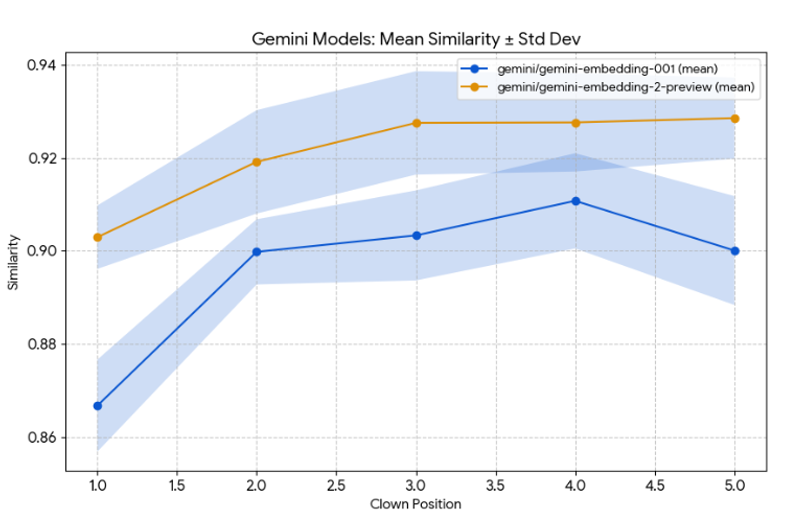
Model knowledge and index presence are separate jobs. What the model already believes about your brand has a Gemini lineage, so Gemini visibility is a fair proxy for it. Whether Siri can cite your page depends on Apple having crawled it. Your Gemini score tells you nothing about that.
Apple's index is being built now, globally. We verified this in a client's server logs: over eight days at the start of September, Applebot made 1,905 requests from 664 Apple addresses, all from IP ranges Apple added on 17 August, rendering pages and pulling PDFs. It was the largest AI-answer crawler on the site by a factor of 2.5 over OAI-SearchBot. That site is Dutch, in a market where Siri AI is not yet available on iPhone. Apple is not waiting for market launches to collect the web.
Apple has published the rules, and they are short. Applebot crawls once and the crawl feeds search, training and answers. Applebot-Extended is a robots.txt token that stops training only; Apple states it "does not crawl webpages" and is "not considered in ranking for Search", so blocking it is free. The nosnippet tag is the switch that removes a page from Siri answers while keeping it in Spotlight and Safari. Pages marked isAccessibleForFree: false stay in search and out of answers. If robots.txt does not mention Applebot, it follows your Googlebot rules. It renders JavaScript. And from 15 September, Cloudflare customers who selected "block Training" also block "multi-purpose crawlers such as Googlebot, Applebot, and BingBot". Check that setting.

Apple's listed ranking factors are conventional: engagement with results, relevance of terms to page content, number and quality of links, approximate location, page design. There is no secret Siri signal.
Two surfaces beyond text
App Intents. Siri AI acts inside apps. "Find the nearest store and book a slot" ends in an app, not on a website. For brands with an app, the App Intents catalogue is now part of the visibility surface, and it is one Google cannot see.
Visual Intelligence. Point the camera, ask Siri. Apple's demos are food, landmarks and products in view. Product imagery, clean product naming and structured product data feed that path. It is early, and Apple has published nothing on how it resolves a product in frame to a brand.
What a global brand should do this quarter
1. Confirm Applebot can crawl. Robots.txt, inherited Googlebot rules, CDN bot rules, Cloudflare's Training setting. Verify Applebot in logs by IP against Apple's published list, not by user agent.
2. Remove nosnippet and isAccessibleForFree: false from pages you want cited. Keep JavaScript and CSS crawlable.
3. Treat Gemini visibility as the proxy for what Siri's model believes, and run your brand and category prompts there with that label attached.
4. Sample Siri AI directly on English-language devices in the US, UK, Canada and Australia for your top 50 prompts. Log whether you are cited, which page, and what the link does. There is no tool for this yet; a person with an iPhone is the tool.
5. Watch Safari referrers on those markets from today. Set up the segment before the data arrives.
6. If you have an app, audit your App Intents. If you sell physical products, audit product imagery and product schema.
7. Keep entity hygiene tight: one name, one description, consistent across your site, Wikidata, directories and third-party coverage. Misattribution is the failure mode we expect most.
What we do not know
The link format, the referrer, and click-through from Siri answers. How Siri handles shopping and comparison questions. When the usage limits start and where they bite. Whether Siri ever fetches a page live at query time. How the Visual Intelligence product path works. Search Engine Journal said it in June and it still holds: "There's no Siri optimization playbook, and anyone selling one right now is guessing."
What we do know: a default assistant with a rebuilt web index and per-paragraph citations is live on every recent iPhone in the world's largest English-speaking markets from today, and the crawler that feeds it has been on your site for weeks.
If you want to know what Siri AI says about your brand, and whether Apple has your pages, talk to us.
Sources
Apple, Siri AI announcement (8 Jun 2026); Apple, Introducing the third generation of Apple Foundation Models; Apple, About Applebot (4 Sep 2026); Apple Security, Expanding Private Cloud Compute; Google Cloud, Powering the next era of confidential AI; Joint statement from Google and Apple; 9to5Mac, Federighi on the Google collaboration; Engadget, iOS 27 available September 14; MacRumors, Siri AI usage limits; MacRumors, iOS 27 Siri AI hands-on; MacRumors, iOS 27 beta 5; Cult of Mac, Siri AI test; iDrop News, Siri AI hands-on; TechCrunch, iOS 27 public beta; Spyglass, Apple wins consumer AI by default; 9to5Mac, Joanna Stern's week with Siri AI; Yahoo Finance, analysts on WWDC; SparkToro, 2026 zero-click study; Nieman Lab, Apple may start paying publishers; Search Engine Roundtable, Applebot IP addresses and Applebot-Extended and ranking; Cloudflare, Your site, your rules; Search Engine Journal, What Apple's Gemini-powered Siri means for SEO; Apple, Applebot IP CIDRs; PromptMarketing client log analysis, 30 Aug to 6 Sep 2026 (client not named).